
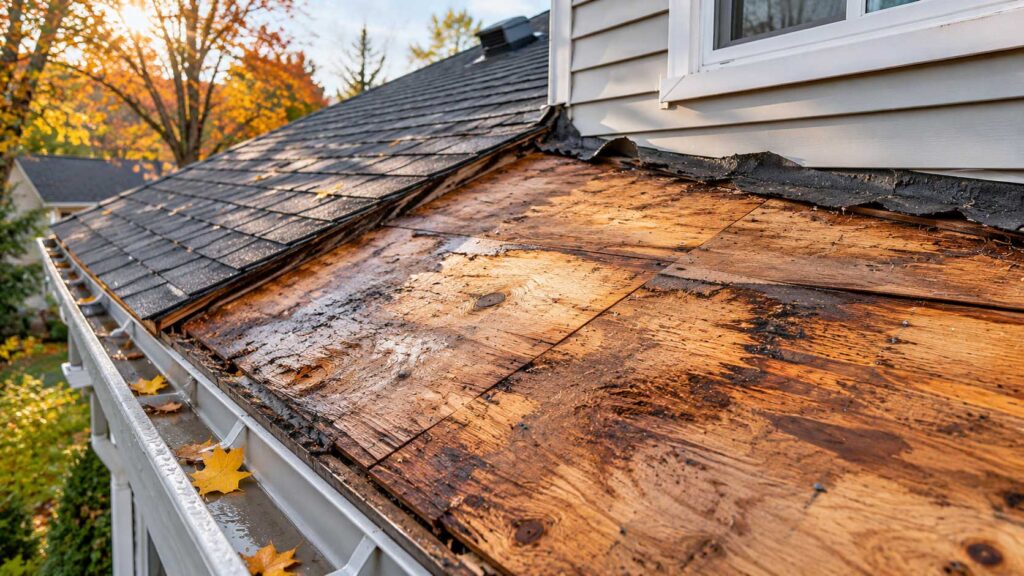
Your roof shingles may look perfectly fine, even when the plywood underneath is wet. Wet Roof Plywood is a concern because moisture can weaken the roof decking that supports your shingles. If the problem continues, it may lead to more serious damage.
However, moisture beneath the shingles does not always mean your roof is leaking. Sometimes, warm indoor air reaches the cold attic and creates condensation. In other cases, damaged shingles or flashing allow rainwater to enter.
For homeowners in Toronto, Richmond Hill, Aurora, Vaughan, and Newmarket, finding the source of the moisture is the first step toward an effective repair. At Unique Roofing Limited, we help homeowners assess roofing problems and determine whether the plywood needs drying, repair, or replacement.
What Is Roof Plywood and Why Is It Important?
A typical shingle roof includes several components working together. Beneath the shingles and underlayment, the roof deck provides a continuous surface attached to the roof framing.
Many homes use plywood decking, while others use oriented strand board, commonly called OSB, or wood boards. The materials differ, but each needs to remain structurally sound and suitable for the roofing system.
The deck supports the roof covering and provides a surface for fastening shingles. If sections become soft, deteriorated, or damaged, installing new shingles alone will not correct the underlying problem.
Why Causes Wet Roof Plywood?
Moisture can reach roof decking from above or below. Finding the source is essential because different causes require different solutions.
Water entering through damaged roofing requires attention to the exterior roof system. Moisture caused by attic condensation may require work involving air sealing, insulation, ventilation, or exhaust ducts.
Sometimes several conditions contribute at once. A roof can have a localized leak alongside an attic moisture problem.
A proper assessment should examine the moisture pattern, surrounding materials, and history of the issue before recommending repairs.
Roof Leaks That Damage Plywood Beneath Shingles
Missing shingles, damaged flashing, deteriorated roof penetrations, or poorly integrated roofing details can allow water beneath the roof covering.
Once water reaches the decking, it may spread or travel along framing before becoming visible indoors. A ceiling stain therefore does not always sit directly below the entry point.
Areas around chimneys, skylights, plumbing vents, and roof transitions deserve careful inspection when leakage is suspected.
Repeated exposure is particularly concerning. Even a small leak can keep the same section damp through successive rainstorms, limiting its opportunity to dry and increasing the risk of deterioration.
How Attic Condensation Makes Roof Decking Wet
Wet decking does not automatically mean rain is getting through the shingles.
During colder weather, warm indoor air can escape into the attic through gaps around ceiling penetrations and other openings. That air carries moisture. When it reaches cold roof surfaces, condensation or frost may develop.
When temperatures rise, accumulated frost can melt and make the underside of the decking wet.
This pattern may affect a broader area than a localized roof leak, although appearance alone cannot confirm the cause. Understanding when moisture appears and how it is distributed helps guide the investigation.
Exhaust and Ventilation Problems That Cause Moisture
Bathroom fans, kitchen exhaust systems, and clothes dryers should discharge through appropriate routes to the outdoors, rather than releasing moist air into the attic.
Disconnected or poorly routed exhaust ducts can contribute to moisture accumulation. Restricted ventilation paths may also interfere with the attic’s ability to manage moisture.
However, adding more roof vents without evaluating the existing arrangement is not a complete solution. Air leakage from the home, insulation conditions, and ventilation need to be considered together.
Correcting the moisture source is essential before replacing damaged wood or covering the roof again.
Warning Signs of Water-Damaged Roof Decking
Wet roof decking is often concealed, but related warning signs may appear indoors or during an attic assessment.
These can include:
- Recurring ceiling stains after rain or snowmelt
- Damp or compressed attic insulation
- Water droplets on the underside of roof sheathing
- Frost accumulation inside the attic during cold weather
- Swollen, separating, or visibly deteriorated wood panels
- Persistent musty odours
Dark marks alone do not establish whether wood is currently wet, structurally damaged, or affected by mould. Old staining may remain after a previous problem has been corrected.
A professional assessment can help distinguish historical marks from active moisture and deterioration.
Does Wet Roof Plywood Always Need Replacement?
Not necessarily. A brief wetting event and prolonged moisture exposure can have very different consequences.
Whether decking can remain depends on its condition, the extent of exposure, and whether it can dry adequately after the source is corrected. The assessment should consider softness, decay, swelling, separation of plywood layers, and the ability to hold fasteners.
Some sections may remain serviceable after drying. Others may need replacement because their integrity has been compromised.
The important question is whether the material remains suitable for its intended purpose. That decision requires closer evaluation than a photograph or ceiling stain can provide.
Why New Shingles Cannot Fix Damaged Roof Decking
A roof replacement provides an opportunity to inspect decking exposed after the old roofing is removed.
If damaged sections are discovered, they should be addressed before the new roofing system is installed. Covering compromised decking leaves the underlying issue unresolved.
Likewise, replacing plywood without correcting the moisture source can allow the same problem to return.
Ask your contractor how concealed decking damage will be documented, how additional work will be explained, and how repairs will be approved. Clear communication helps homeowners understand what was found and why the proposed work is necessary.
Address Hidden Moisture Before Winter
Autumn is a practical time to investigate signs of roof or attic moisture. Cold weather can reveal condensation problems, while snow and ice may make exterior assessment more difficult.
Avoid walking on a roof that appears soft or uneven. If you inspect an attic, remain at a safe access point and never step onto unsupported ceiling surfaces.
Unique Roofing Limited helps homeowners understand roofing concerns and identify appropriate next steps. Whether moisture is discovered during a leak investigation or a roof replacement, the goal is to address the cause and assess the materials beneath the shingles.
Concerned about wet plywood under your roof? Contact Unique Roofing to discuss an assessment and repair options.
📞 416-522-3063
🌐 www.uniqueroofing.ca